
The Last Word
In Hélène Hérault’s One Way, a woman writes twenty-four letters her husband can never answer. The one-sidedness isn’t a gimmick. It’s the entire argument.
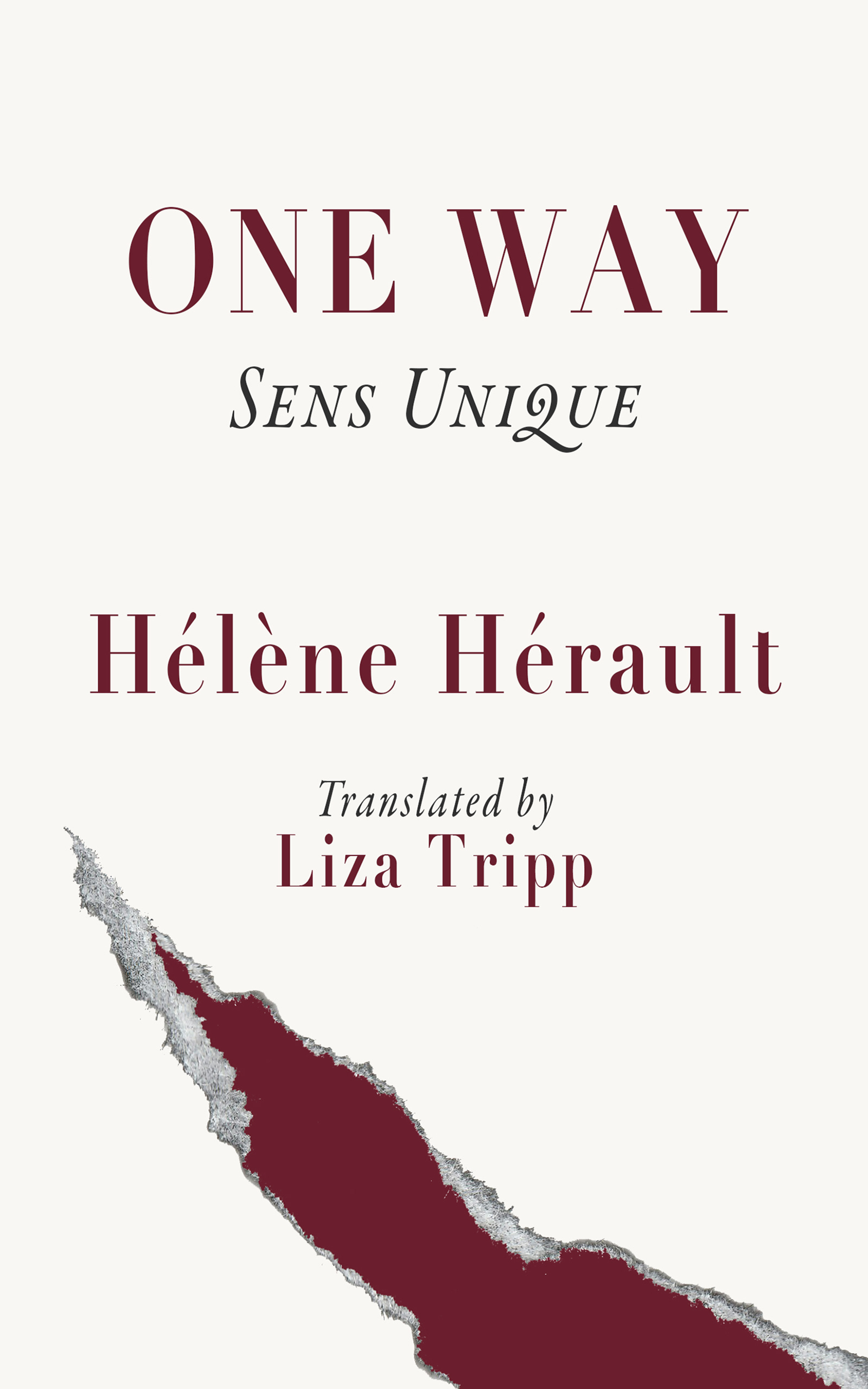
Somewhere in the middle of an ordinary working day, a red envelope lands on a CEO’s desk. It has no return address. He has demanded that no one disturb him, and now this thing sits among his files, refusing to be sorted by priority or seriousness or contempt. It bothered him before he opened it. Inside, his wife — who left their house weeks ago without saying where she went — has written to tell him the terms of the next several months of his life:
So this will be a one-way arrangement. I’ll bear the risk. You can choose not to open these envelopes. But I know you. You’ll want to know everything, control everything, like always. You’re going to read my letters. You’ll get annoyed, you’ll get angry, but you’re going to read every word I write.
This is the engine of Hélène Hérault’s One Way, a French novella now arriving in English from Silent Clamor Press in Liza Tripp’s translation. Béatrice sends Gaëtan twenty-four letters between January and June. He cannot reply — no forwarding address, no phone, no email, nothing but paper that arrives when she decides it will. Most novels about a wronged woman build toward the scene where she finally says it all to his face. One Way withholds that scene on principle. It understands something most of those books don’t: that the confrontation you can win out loud is not the one that has been costing you your life.
What Béatrice takes, in the first instance, is not revenge. It’s a position. For thirty-two years she has occupied the background of a marriage to a man who controlled the foreground; the letters are the first place she gets to set the terms. Tripp, who spent the translation listening for exactly this, names it precisely:
By having her protagonist Béatrice take up her own pen, she triumphantly gives her the upper hand after years of living life in the background. She now has the ability to control how things will unfold, and her words at once convey a mixture of restraint, rage, vengefulness, and resignation, all cloaked in a degree of French politesse.
You feel that upper hand most in the letters where Béatrice simply insists on existing. Early on, she imagines Gaëtan reading at his enormous desk, and the prose tightens into something close to a manifesto:
At this precise moment, somewhere, I exist. As I have for thirty-two years. I don’t only exist at night, late at night. I don’t only exist on Sundays or during our rare vacations. I don’t spend my days holding my breath waiting for you. I live, Gaëtan. I have a job, hobbies, a daughter, friends, a home. A life! A life you chose to ignore.
There is no weeping here, no plea. The voice is dry, lucid, a little amused at its own power. That lucidity is the hardest thing in the book to translate and the most important. As Tripp puts it, Béatrice “is always lucid,” and the English had to “convey that wide range of emotion, while still reminding the reader of her stability.” A French sentence can run half a page or shatter into fragments and still sound controlled; rendered literally into English, Tripp notes, the same moves can make a speaker “come across as unhinged.” The translation’s quiet achievement is that Béatrice never tips into hysteria. Her anger stays, in Tripp’s phrase, simmering yet always controlled — which is precisely what makes it frightening.
Hérault has said that the form chose her as much as she chose it. She loves real letters, paper and pen, a vanishing habit she mourns. But the deeper reason is structural, and she is blunt about it:
In One Way, my idea was to pull the reader into the story, and keep them holding their breath until the very end... For creating and maintaining that sense of urgency, the epistolary form proved to be crucial.
The urgency doesn’t come from what the letters say. It comes from the gaps between them. Béatrice writes on no fixed schedule — a flurry, then weeks of nothing — and the silences do the work the sentences can’t:
There are days and sometimes weeks of silence between each of Béatrice’s letters; perhaps the swathes of silence, more than the letters themselves, allow the tension to set in.
She is right, and you can watch it operate. In one letter Béatrice coolly games out what would happen if she simply stopped writing — how Gaëtan would feel relief, then a void, then dread:
You’d compulsively open and close the mailbox, perhaps several times in a row. To check, to make sure... Then, as the anguish gradually set in, you’d start wondering: “What else could she have up her sleeve?”
The man who controlled everything has been reduced to a figure waiting at a mailbox, and he doesn’t even get to be a character in the scene. Hérault’s economy here is a craft principle she’s named directly: in the short form, she says, “the more what is said becomes essential, the more what is not said becomes equally vital.” The novella weaponizes brevity. Every withheld detail is a turn of the screw.
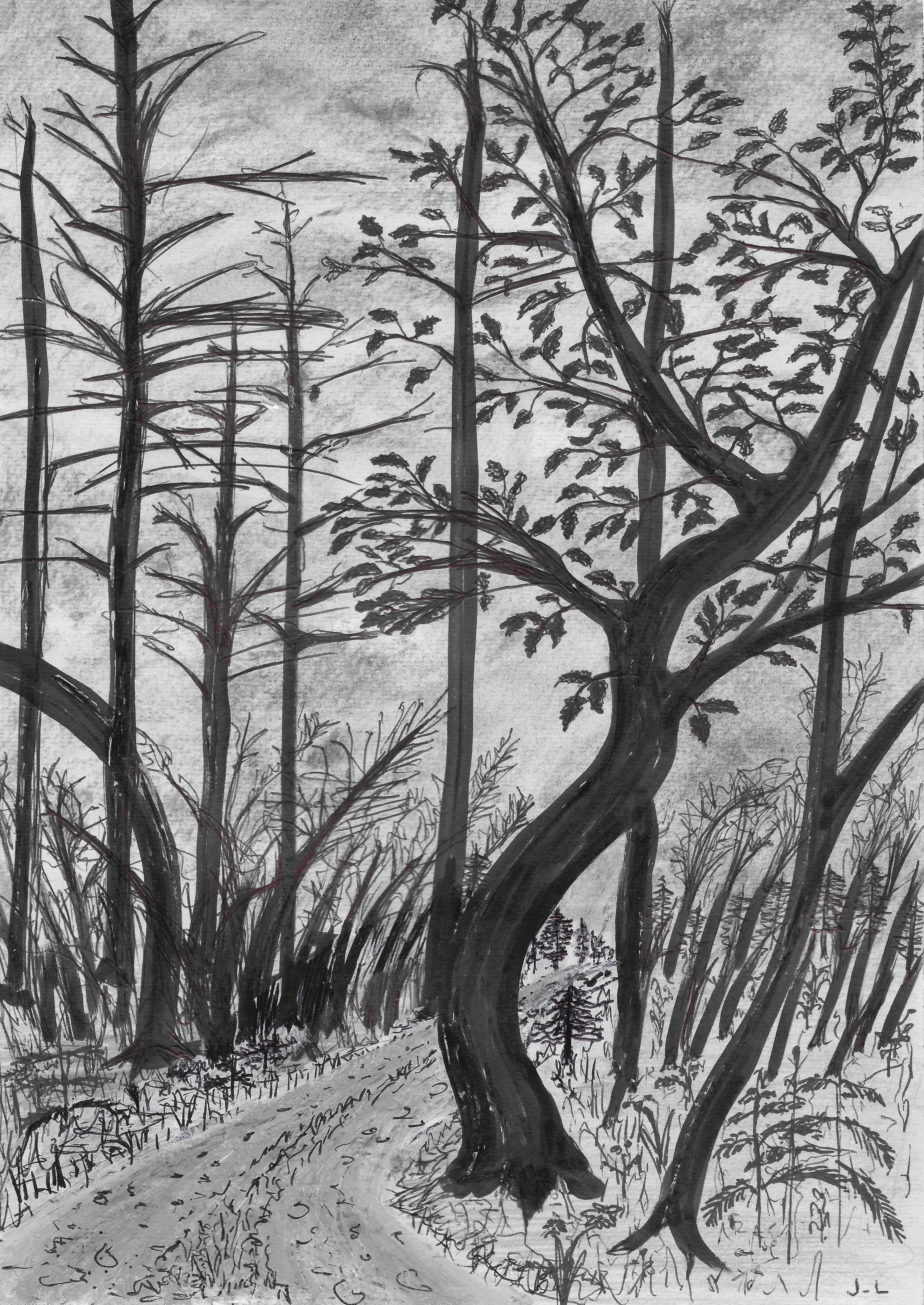
It’s worth knowing how old this maneuver is, because it tells you what Hérault is really doing. The single-voice epistolary novel begins, more or less, with the Lettres portugaises of 1669 — a series of letters from an abandoned nun to a French officer who never writes back. That book inaugurated a long tradition: the letter became the one literary form widely available to women, both as characters and as authors, producing an array of female voices at once realistic and eloquent — from the Portuguese nun through Richardson’s Pamela and Clarissa to Rousseau’s Julie. But it was a double-edged inheritance. Scholars have long noted that the genre most persistently associated with women specialized in narrowing the range of female expression — that these epistolary voices “tend to describe confinement more than liberation.” The letter was a room women were allowed to write from precisely because it was a room: private, interior, contained.
This is the tradition One Way walks into and turns inside out. Hérault takes the form built to contain women — the form of the confined, the jilted, the one who waits for a reply that defines her — and hands it to a woman who refuses to wait, refuses a reply, and uses the containment as a cage for someone else. The nun of 1669 wrote into silence because she was powerless. Béatrice imposes the silence, and it is the man who is trapped inside it.
The opposite of being silenced is not shouting. It is authorship — the right to hold the pen, and to decide who is left without a reply.
That decision is, finally, the book’s nerve. Around the novella’s midpoint the letters stop and One Way breaks into other voices — the couple’s daughter, an old friend, a man at the back of a crematorium — circling an event the reader is left to assemble from fragments and refusals. I won’t describe what they’re circling. What matters is who never speaks. Across the whole book, in the letters and after them, in life and even in death, Gaëtan is never granted a line of his own. His reactions exist only where Béatrice and the others place them. Hérault made this choice on purpose, and her reasoning is the most quietly radical thing in any of her commentary:
Gaëtan’s reactions find their place in the space between the words and sentences. They don’t need to be verbalized... Gaëtan and his henchmen have been heard, read before. They’ve explained and justified themselves quite enough already. For ages. Silencing them for a few pages will do us all some good!
Notice that she doesn’t silence him to punish him within the plot. She silences him as a formal act, a redistribution of narrative airtime — and then she trusts you to fill the vacuum:
It’s up to us to read between the lines, to construct a whole world for ourselves... the enormous trust that I put in the reader to interpret the silences.
This is why the book’s restraint reads as strength rather than evasion. Tripp frames her whole task as a single question — “What words could Béatrice utter in English that would simultaneously allow others to remain unsaid?” — and the answer the book keeps arriving at is: the fewer, the better. By the end, when Béatrice writes that she will not put down her pen because “putting down my pen would be celebrating your victory,” the line carries the full weight of everything the form has been doing all along. The pen is not a metaphor. It is the thing itself.
The book takes its epigraph from the late French singer-songwriter Anne Sylvestre: That’s not a tragedy — that’s just a woman. The line is the spine of Sylvestre’s 2013 song “Juste une femme,” and the joke inside it is bitter. Sylvestre wrote the song after watching men close ranks around a man accused of assault, one public figure waving it off on the grounds that, after all, nobody had died — to which she answered that a soul had died. The genre of One Way keeps promising tragedy in the classical sense: a powerful man, a fall, a death. The epigraph refuses the frame. The dead man is not the tragedy. The woman is the subject.
What makes Sylvestre the right ancestor for this book is that she wasn’t following anyone. She was writing the silenced woman’s interior decades before it was safe or fashionable to — “Une sorcière comme les autres” in 1975, with its refrain of a woman who had always kept quiet, and “Juste une femme” in 2013, years before the broader cultural reckoning arrived. Hérault belongs to that line. Tripp puts her finger on the reason the book doesn’t feel tethered to any single moment: Béatrice’s strength is what “allowed her to endure a situation that is all too familiar in so many languages.” Not this decade’s situation. So many languages, for so long. The book’s French reviewers reached for the same permanence — one called Hérault a master of the ellipsis, another noted that you keep turning the pages without ever being told everything, “because while we’d like to know everything, sometimes we cannot explain everything.” The not-knowing isn’t a flaw in the design. It is the design.
Here is what should make you act. The market does not reward this kind of book. A novella is too short to anchor a marketing campaign; a translation from a small French press carries no built-in audience; a story whose power lives in what it leaves out cuts against every incentive toward spectacle and over-explanation. The instinct everywhere right now is to say more, louder, faster — and One Way is built on the opposite conviction, that the most devastating thing on the page is often the sentence that was withheld. Books this disciplined, this willing to trust a reader with the silences, are not getting harder to write. They are getting harder to publish. This is one that made it through.
So read it slowly, the way it asks. Let the weeks of silence between letters land. Resist the urge to flip ahead for the reply that never comes — that absence is the point, and it is doing more to you than any reply could. Béatrice spent thirty-two years in the background of someone else’s story. For the length of this small, severe, unforgettable book, she holds the pen, and no one gets to answer her. That, it turns out, was always the only ending that could matter.
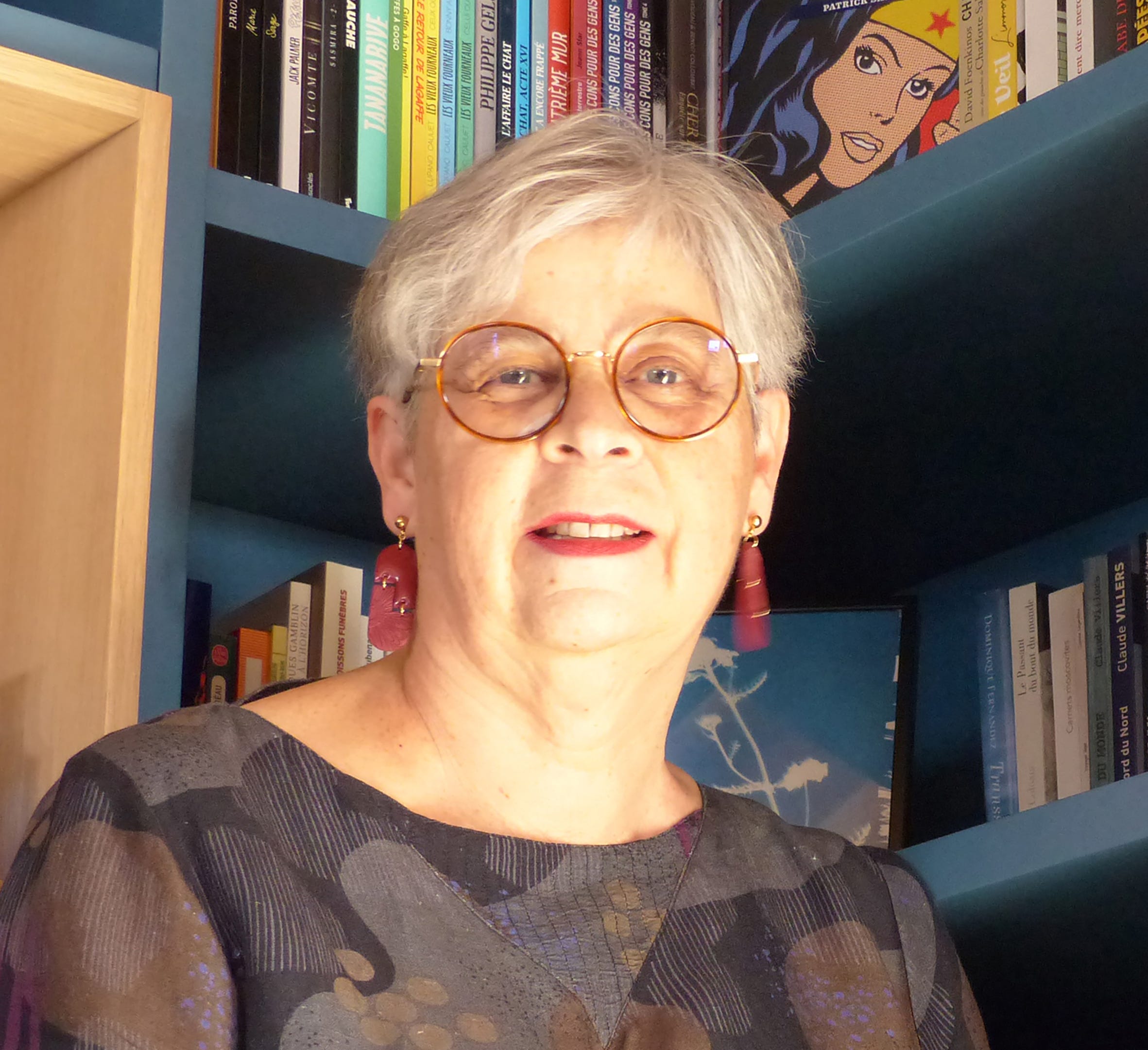

Hélène Hérault’s One Way, translated from the French by Liza Tripp, is available from Silent Clamor Press on July 28, 2026.


If you enjoyed this piece, consider sharing it with a reader who’d appreciate it. Silent Clamor is an independent press, and every repost helps these books find the people they’re meant for.